
Own factory · Hengshui, Hebei, China · est. 2004
Arctic Kinsmen — two polar bears on ice Arctic KinsmenFur Factory · OEM & Materials
Home / Insights
Factory direct · OEM & raw materials

Insights

Sourcing, production and private-label notes for buyers building a fur assortment — written by the people who grade the pelts and run the samples.

Sourcing ·

Sustainability and ethical sourcing — what buyers actually ask

Compliance questions now arrive before the first sample, not after the first shipment. Here is the paperwork we can put behind a fur order, and the questions only your market can answer.

Sustainability and ethical sourcing — what buyers actually ask

Five years ago a fur order started with a silhouette and a quantity. Today, for most European and North American buyers, it starts with a document request: which species, which origin, which certification, and can you prove it. That shift is not cosmetic — it changes what a factory has to be able to produce on paper, not just on a cutting table.

What a genuine fur order can be documented with

Genuine fur is a regulated material, and the useful distinction is between documentation that exists for every shipment and documentation that depends on the species and the market.

  • Commercial invoice and packing list — the base layer. These identify species and quantity on every consignment, and customs will ask for them regardless of destination.
  • Certificate of origin — issued for the shipment, used for duty calculation and for buyers whose compliance file requires country of manufacture.
  • CITES documentation — applies where the species is listed. It is not issued for every fur, and a supplier who says "we have CITES for everything" is telling you they have not checked. Ask which species in your order is listed and see the permit for that species.
  • Material declarations — a written statement of fibre content and species by style, which is what retail compliance teams usually need for the product record.

The questions we cannot answer for you

Whether genuine fur may be sold in your market is a legal question about your market, not a manufacturing question. California, parts of the European retail sector and most advertising platforms have their own rules, and they change. We can tell you exactly what a garment is made of and supply the documents that prove it; we cannot tell you that your channel will accept it.

This is why we produce the same silhouettes in high-grade faux fur. Many of our clients run both lines — genuine fur for the customers who want it, faux for the channels that will not carry it. Same pattern, same finishing standard, different material declaration.

How to build this into a purchase order

The practical advice is boring and it saves months: put the documentation list into the purchase order, not into an email thread after shipment. Specify species, origin, and which certificates are required per style. Agree who pays for CITES permits where they apply. Ask for a sample of the paperwork with the counter-sample, so you find out early whether your supplier can produce it.

If you are building a compliance file for a retail partner, tell us at the briefing stage. It changes how we pack and which documents travel with the goods, and it is far cheaper to arrange before production than after.

Private label ·

From commodity to brand — what actually differentiates a fur line

Two coats can leave the same factory at very different retail prices. The gap is rarely the fur itself — it is the three decisions made before cutting starts.

From commodity to brand — what actually differentiates a fur line

Most buyers who approach a fur factory for the first time ask the same question in different words: how do I avoid competing on price? The honest answer is that you cannot compete on price if your product is the same product. Differentiation in fur is decided in three places, and none of them is marketing.

1. The block, not the style

A block is the base pattern a style is cut from — shoulder slope, armhole depth, back length, the amount of ease through the body. Two factories can produce "the same" mink coat from visibly different blocks, and the difference is what a customer feels in the fitting room.

This is where a private label earns its margin. If your block is yours, and it fits your customer better than a stock block, you have something a competitor cannot buy off a catalogue. Developing one takes a counter-sample or two and a clear fit brief; it is the cheapest differentiation available in this industry.

2. Fur grade and matching, not fur type

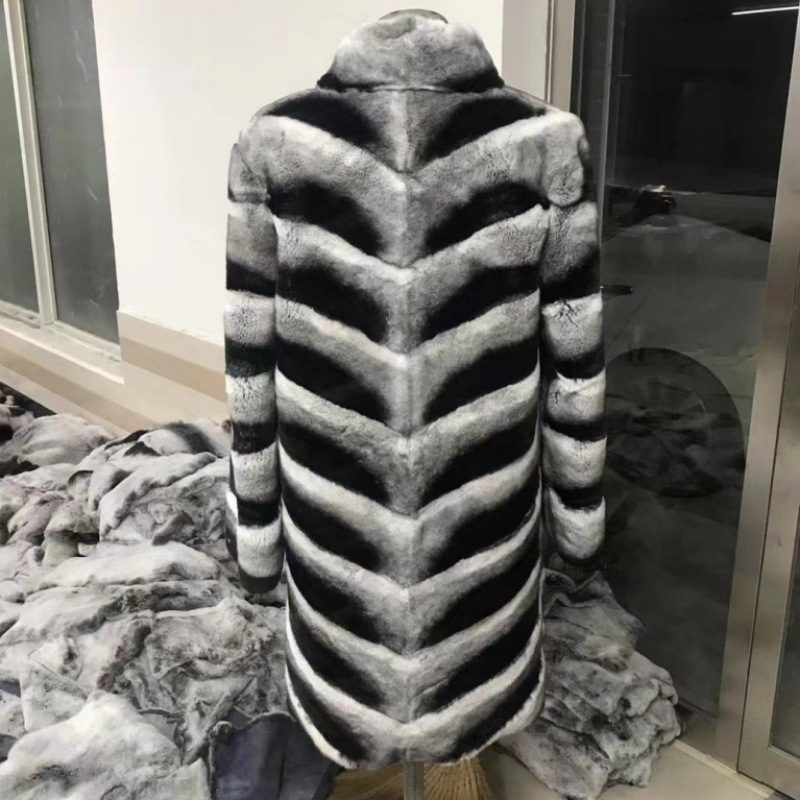
"Mink coat" covers an enormous range. Male versus female skins, velvet versus let-out, nap length, colour depth, and above all how consistently the panels are matched. A coat cut from skins sorted skin by skin against a single colour standard looks like one object. A coat assembled from whatever was in the bin looks like several.

Buyers who understand this stop specifying "brown mink" and start specifying a grade and a colour standard, then check a counter-sample against it. That single change is usually worth more to the final product than any label.

3. The finishing decisions nobody photographs

Lining quality, the way the hem is weighted, hook-and-eye placement, collar roll, the hand of the shoulder pad, hardware finish, and how the garment is pressed before packing. None of these show up in a lookbook. All of them are visible to a customer in the first thirty seconds of trying something on.

What this means for a first order

You do not need a large minimum to differentiate. You need to spend your first sampling round on the block and the colour standard rather than on five more styles. Five pieces of one well-fitted coat, correctly matched, will outsell twenty pieces of five average ones.

Bring three things to a first sampling meeting and the conversation gets concrete fast: a fit reference (a garment that fits your customer well), a colour standard (a physical swatch, not a screen), and your retail positioning. We can work from there.

Production ·

From raw pelt to finished coat — where the cost really sits

Buyers often assume the skin is the expensive part. In a well-made garment it is the sorting, the matching and the hours — which is also where the quality difference hides.

From raw pelt to finished coat — where the cost really sits

When a quotation comes back higher than expected, the instinct is to assume the fur is overpriced. In practice a fur garment's cost is spread across four stages, and the one buyers focus on is rarely the one that decides the price.

Stage one: buying and grading

Pelts are bought by the lot at auction or from tanneries, then graded on the factory's own tables — density, colour depth, size, nap direction. This is where a lot is either usable for a matched garment or broken into smaller parcels. Grading costs labour, and it is also where the factory absorbs the risk of a lot that does not grade out.

A factory that buys graded bundles from a broker pays more per skin but carries less risk. One that buys raw lots and grades in-house pays less per skin but must hold stock and take the loss on the parcels that do not match. Both are legitimate; they produce different prices and different consistency.

Stage two: matching and cutting

Fur is not fabric. You cannot cut around a flaw the way you cut around a print repeat, and every panel must run the same direction. Matching a coat means laying out skins so that shade and hair length flow across the body — which is why two coats from the same style can consume different numbers of skins.

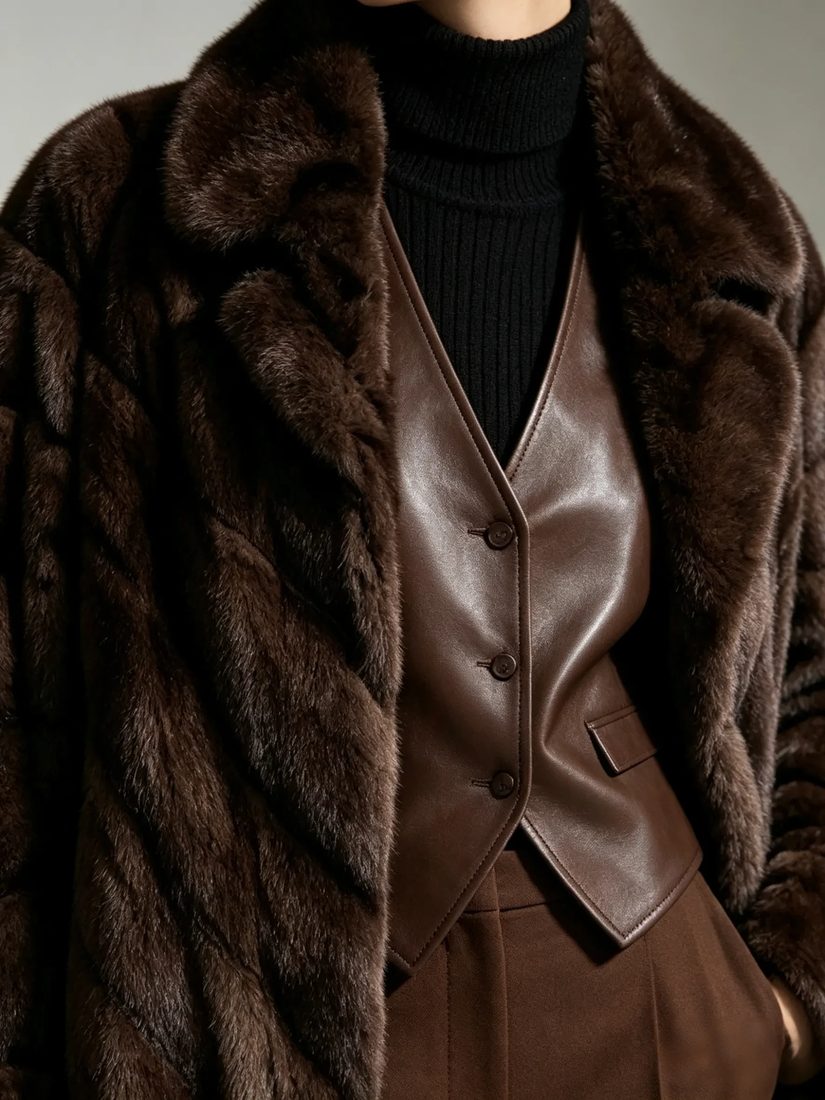
Construction choice matters here too. Let-out work — cutting skins into diagonal strips and re-sewing them into a longer, narrower panel — uses more labour and produces a softer, more fluid garment. Cross or panel construction is faster and reads as more graphic. Neither is better; they cost differently.

Stage three: sewing and finishing

Furriers are skilled tradespeople, and the hours per garment are high and largely invisible in a photograph. Collar roll, sleeve setting, lining attachment, hem weighting and the final press are all hand operations. This is the stage where a cheap quotation becomes visible two seasons later, when a seam starts to pull.

Stage four: inspection, packing and freight

Piece-by-piece inspection, pressing, bagging, cartoning, and the documentation that travels with the goods. Freight is usually the smallest line and the easiest to argue about; it is rarely where the real difference sits.

How to judge quality before you commit

  • Look across the body, not at the collar. Shade and nap should flow; if a panel reads darker under raking light, matching was rushed.
  • Run a hand against the nap, then with it. Consistent resistance means consistent direction.
  • Check symmetry at the front edge — both sides should hang and curl identically.
  • Turn it inside out. Lining seams, interlining and the finish of the hem tell you more about the factory than the outside does.

This is also why we recommend a counter-sample rather than a photograph. A photograph can show a silhouette; it cannot show whether the panels were matched or whether the collar will roll.

Start an inquiry

Questions about a style, a fur grade or a material lot?

Our sampling team replies with material options, MOQ and lead time within 12 working hours. No cart, no online payment — every order is quoted and confirmed with you directly. No obligation, no pushy follow-ups.

Send your inquiry Chat on WhatsApp